Let the medium shape the choice
Before style, before subject, a work of art is a set of materials doing their best to stay together. The medium decides how it ages, what can go wrong, how it should be handled and where it can safely live. Learning to read materials is the most useful habit a collector can build.
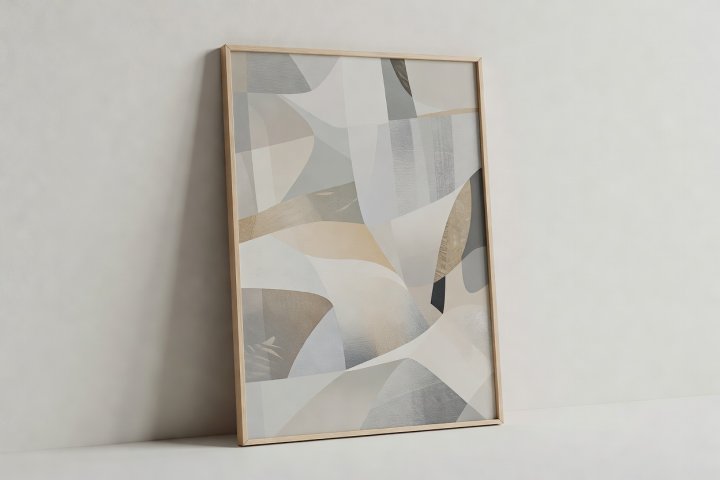
Paint on canvas and panel builds in layers
An oil or acrylic painting is a stack: support (canvas, linen, wooden or composite panel), a preparatory ground, paint layers and often a varnish. Problems usually begin where layers meet. Canvas expands and contracts with humidity, so paint on canvas can develop networks of cracks over time; panels can warp or split along the grain. Oil paint continues to change slowly as it cures, while acrylic stays more flexible but can attract dust and soften in warmth.
When examining a painting, note the type of support from the back, whether the canvas has been relined (a second canvas attached behind the first), and whether the varnish is even or yellowed. Varnish is generally designed to be removable by a conservator; paint is not.
Works on paper respond to light and air
Drawings, watercolours, pastels and photographs share a vulnerable support. Paper can yellow, become brittle or develop small brown spots known as foxing, often linked to damp and impurities in the sheet. Many watercolour pigments and inks fade with light exposure, and the change cannot be reversed. Pastel and charcoal sit loosely on the surface and can be smudged or shed by careless handling or a glazing panel touching the work.
Ask what the work is mounted on. Acidic boards and tapes cause staining that spreads into the sheet. A work previously framed with conservation-grade materials has usually had an easier life.
Ceramics and glazed vessels are hard but brittle
Fired clay resists light and moderate humidity well, which makes ceramics comparatively forgiving on display. The weakness is mechanical: chips at rims and feet, cracks that may run hidden under the glaze, and old repairs filled and painted to match. Glaze can show crazing, a fine network of cracks that is sometimes part of the intended surface and sometimes a sign of stress. Unglazed or low-fired bodies can absorb moisture and salts.
Lift a vessel with both hands, supporting the base, never by a handle or rim. A gentle tap may sound duller where there is a crack, though this is a clue rather than a test.
Sculpture in metal, stone and wood carries weight and surface
Bronze and other metals carry a patina, a surface colour produced chemically or by age; it is part of the work and should not be polished away. Stone can be stained by oils from hands and damaged by cleaning products. Wood moves with humidity and can split or attract insects. Large pieces raise practical questions about floor loading, fixing and safe movement that are easy to overlook in a showroom.
For cast works, ask whether the piece is one of an edition and whether the number and foundry details are recorded. Editions are discussed with prints below and, for documentation, on the provenance page.
Prints and editions: read the margins
An original print is made by the artist or under their direction from a matrix such as a plate, block or screen. Etching, lithography, woodcut and screenprint each leave characteristic marks: a plate mark pressed into the paper around an etching, for example. A reproduction made photomechanically lacks these traits; under magnification it often shows a regular dot pattern.
Margins carry the edition number, signature and sometimes a publisher's blindstamp. Trimmed margins, faded pencil and stains hidden under a mount all matter, so ask for the sheet to be seen out of its frame where possible.
Compare the demands side by side
The table summarises general tendencies. Individual works vary with their materials, their history and the conditions they have lived in.
| Medium | Light sensitivity | Humidity sensitivity | Common vulnerabilities | What to check first |
|---|---|---|---|---|
| Oil on canvas | Moderate | Moderate to high | Cracking, flaking, yellowed varnish | Back of canvas, raking light across surface |
| Watercolour, ink, pastel | High | High | Fading, foxing, smudging, mount staining | Colour at edges under the mount |
| Glazed ceramic | Low | Low to moderate | Chips, hidden cracks, disguised repairs | Rim, foot and any area of uneven glaze |
| Bronze | Low | Moderate | Patina loss, corrosion spots, loose bases | Surface for bright or powdery patches |
| Carved wood | Moderate | High | Splits, insect activity, surface loss | Joints, base and small exit holes |
| Original print | Moderate to high | High | Trimmed margins, fading, tape stains | Margins, plate mark, edition details |